
WMPC 2026 · Field story 001
Five frames.
One living field.
A visual journey from biological control in the net-house to weed competition in the crop—showing participants how observation, science and storytelling can come together in one complete entry.
This is a designed sample showing the level of detail expected from an excellent submission. It is not an eligible competition entry, does not appear in jury scoring, and does not represent a declared result.
Where field observation becomes scientific communication
These five photographs were supplied as an example field narrative from the ICAR–Directorate of Weed Research campus in Jabalpur. The opening frames move inside a net-house to observe the Mexican beetle, Zygogramma bicolorata, on Parthenium hysterophorus. The story then moves into a wheat (Triticum aestivum) research field, where Avena spp. rises above the crop canopy and reveals the competitive advantage of an escaped grassy weed. The final frame records a separate insect-feeding observation on parthenium and demonstrates why careful identification matters as much as a dramatic image.
Sub-theme: Biological weed management, crop–weed competition and field-based scientific observation.
Every photograph should answer a scientific question.
Open the story through detail, context and management relevance—not through beauty alone.
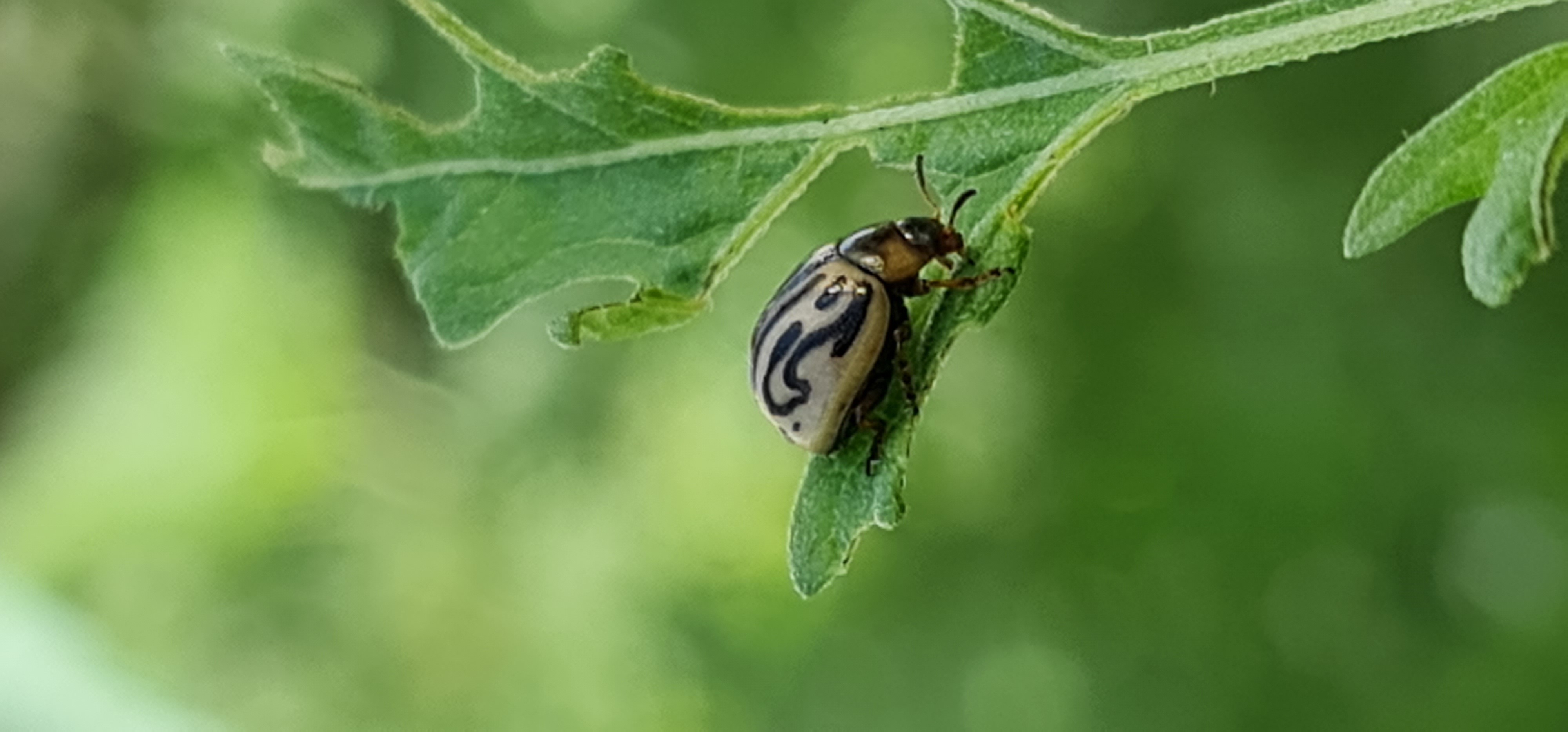
Biological weed management
The First Bite
Zygogramma bicolorata on Parthenium hysterophorus
An adult Mexican beetle feeds along the margin of a parthenium leaf inside the ICAR-DWR net-house. The cream-and-black elytra are sharply separated from the soft green background, while missing tissue along the leaf edge adds visible evidence of herbivory. Z. bicolorata is used in the biological management of parthenium. Adult and larval feeding can progressively remove foliage and contribute to suppression of plant vigour as part of an integrated management programme. This frame works because it records the bioagent, its host and the biological process in one composition—the photograph does not merely show an insect; it makes the management interaction readable.
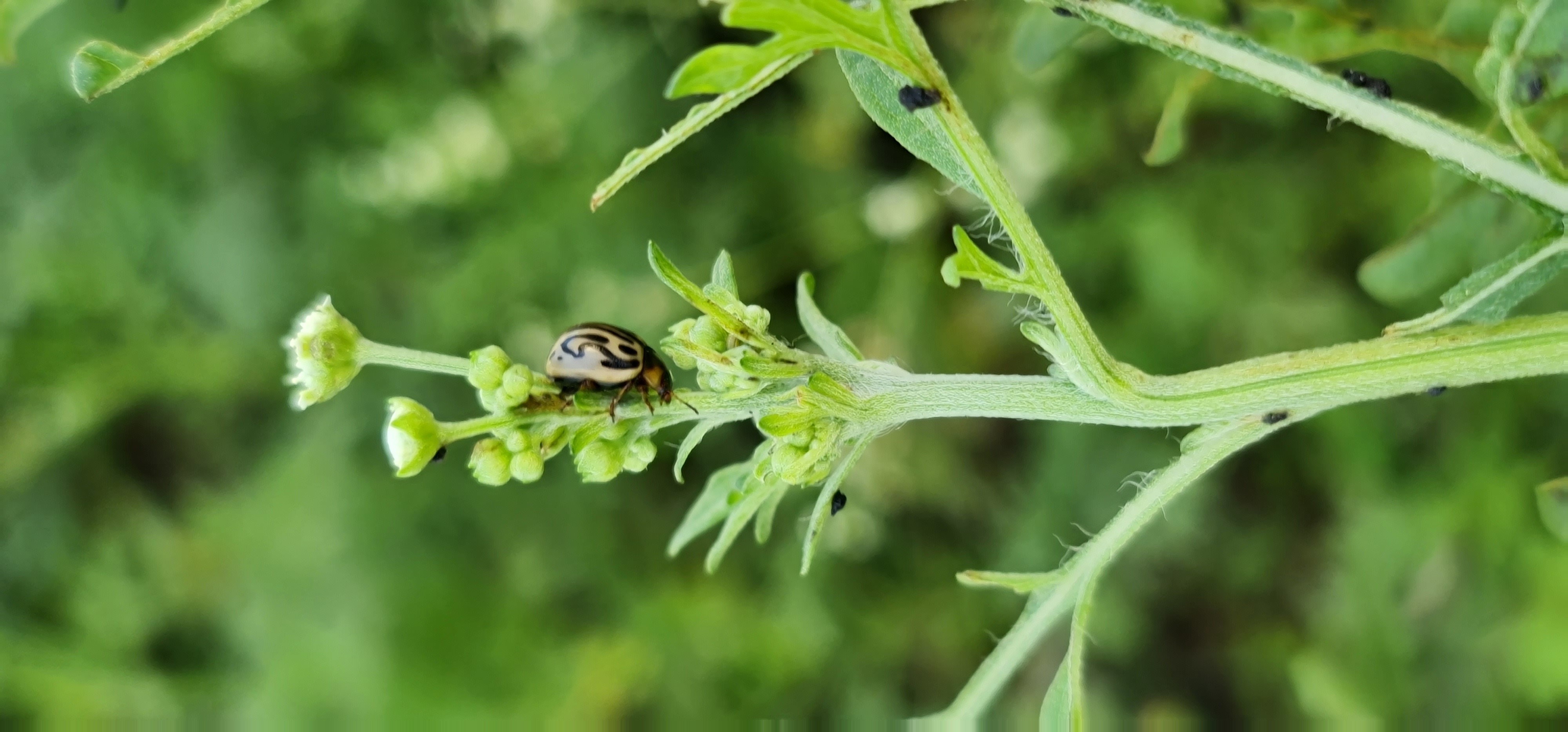
Behaviour and monitoring
At the Growing Point
Monitoring Z. bicolorata on reproductive growth
The second frame gives the beetle more ecological context. Its position near the terminal buds places the insect within the actively growing portion of the weed and allows the viewer to read the branching pattern, developing inflorescences and surrounding leaves. For a monitoring record, this wider composition is valuable because it documents where the insect was observed, not merely what it looks like. Repeated observations of feeding activity, beetle abundance, plant condition and subsequent defoliation can help researchers interpret biocontrol establishment. The image reminds entrants that a photograph becomes stronger scientific evidence when the organism and its field context are shown together.
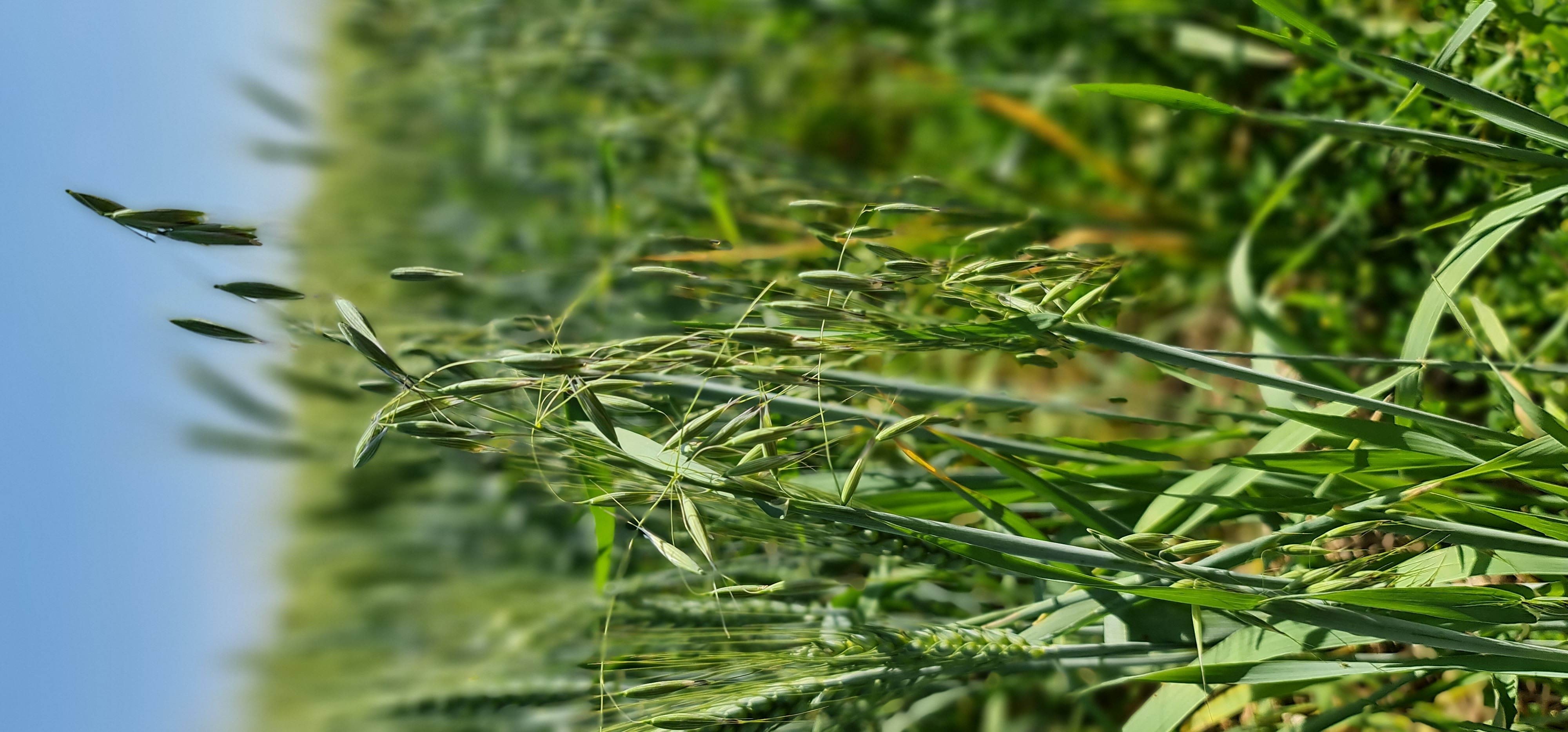
Crop–weed competition
The Silent Competitor
Avena spp. in wheat (Triticum aestivum) · species-level confirmation required
A loose, drooping Avena panicle rises through the wheat canopy and makes a visually similar grassy weed suddenly distinct. Wild oat is an important competitor in wheat-growing systems because its resemblance to the crop during early growth can delay recognition. By the reproductive stage, the open panicle and hanging spikelets become prominent, but the plant has already competed for light, water, nutrients and space. The shallow depth of field directs attention to the diagnostic seed head while retaining enough crop context to explain the problem. For a contest entry, the cautious identification is deliberate: photographs can support diagnosis, but species-level confirmation should use field characters and expert verification.
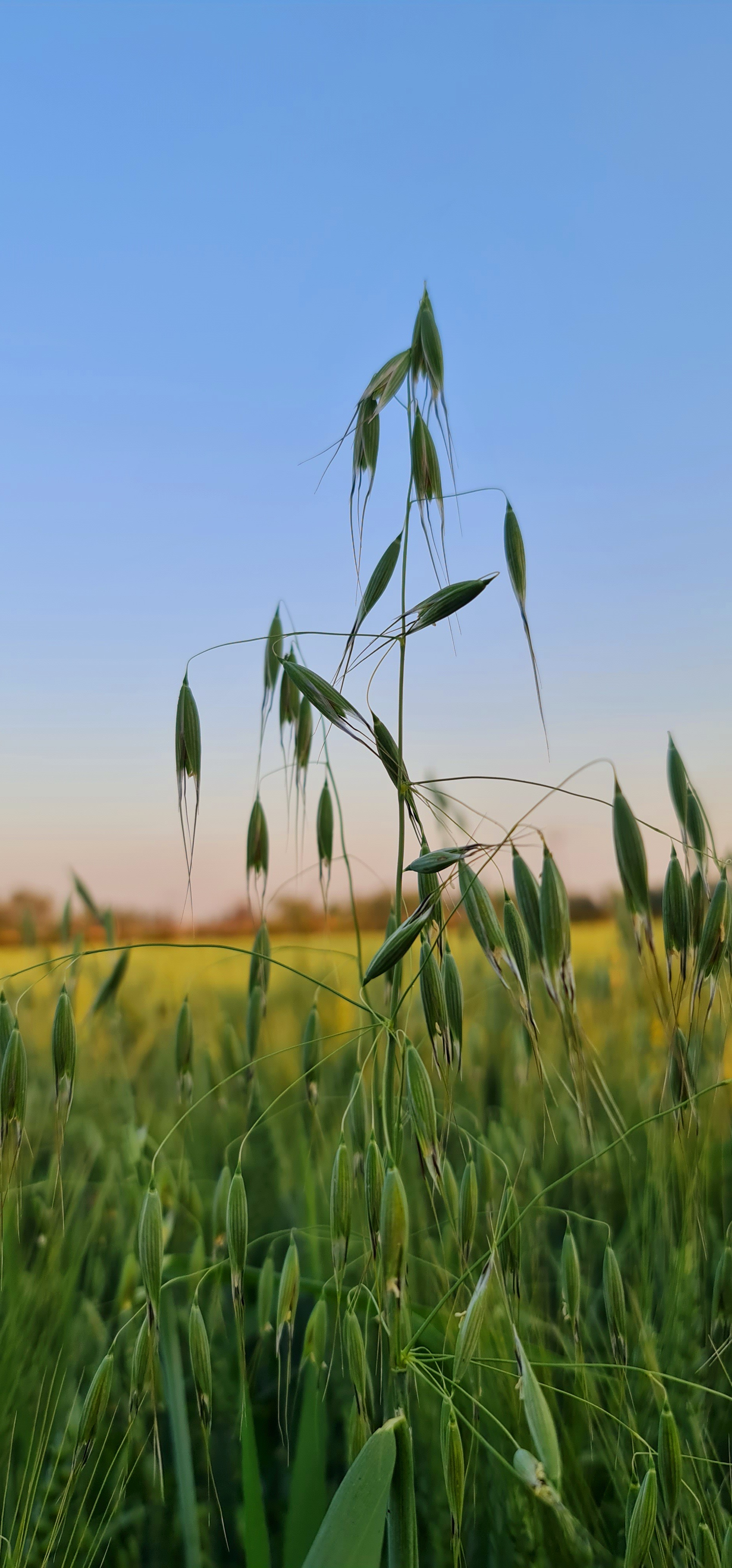
Seedbank prevention
Above the Canopy
Avena spp. above a wheat (Triticum aestivum) canopy
Seen against an open blue sky, the tall panicles turn a field-level management issue into a clear silhouette. The image shows why surviving weeds should be documented before seed shed: even a small number of reproductive escapes can return seed to the soil and sustain future infestations. The elevated camera angle separates the panicles from the crop, while the warm horizon gives the photograph a sense of time and season. Scientifically, the frame supports a practical message—late-season scouting is not simply an assessment exercise. It informs rogueing, harvest hygiene, resistance investigation and future weed-management planning. The exact Avena species must be confirmed from intact diagnostic material.
Observation before conclusion
The Unexpected Visitor
Hairy caterpillar on Parthenium hysterophorus · species unconfirmed
A vividly marked hairy caterpillar crosses a deeply lobed parthenium leaf, creating the most dramatic colour contrast in the series. Yet this is also the frame that demands the greatest scientific restraint. The photograph records an insect–plant association and possible feeding activity, but it does not by itself establish the caterpillar as a safe or approved biological-control agent. Species identity, host range and actual feeding damage require expert confirmation and repeated observation. In this sample narrative, the image is presented as a companion biodiversity record; Z. bicolorata remains the intended parthenium bioagent documented in Frames 01 and 02. Good scientific photography makes uncertainty visible instead of hiding it.
More observations. Still only five competition frames.
These two photographs extend the visual record but are deliberately kept outside the main submission. They show how participants can document field context and then select only their five strongest, most relevant images.
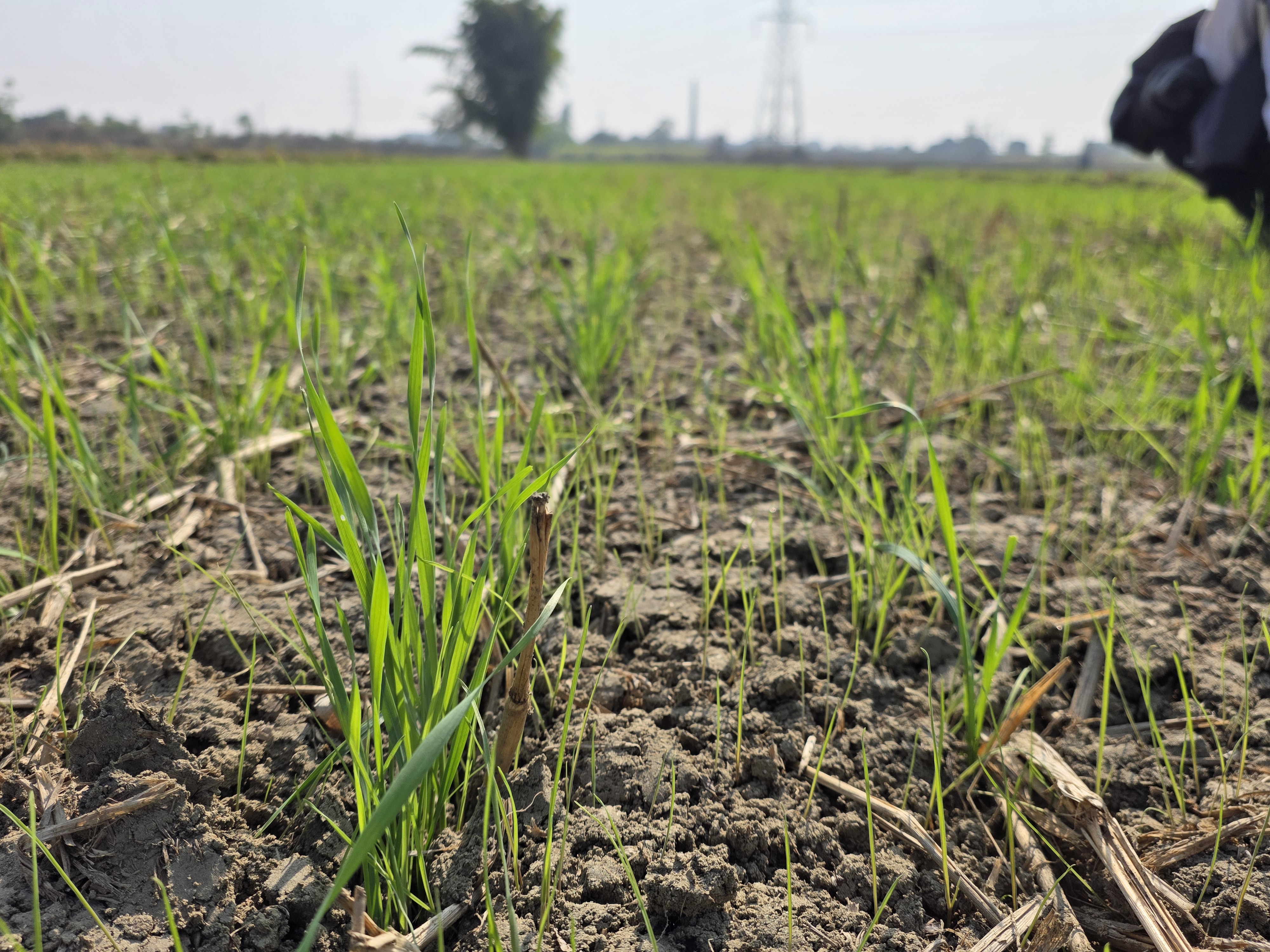
Before Competition Becomes Visible
A low camera position records young crop establishment, exposed soil, residues and variation within the stand. This kind of contextual image can support later weed observations by preserving the field condition before canopy closure. It is useful evidence, but the photograph does not yet isolate a clear weed-management subject.
Declared: 25 November 2025 · file EXIF: 28 November 2025 · location not embedded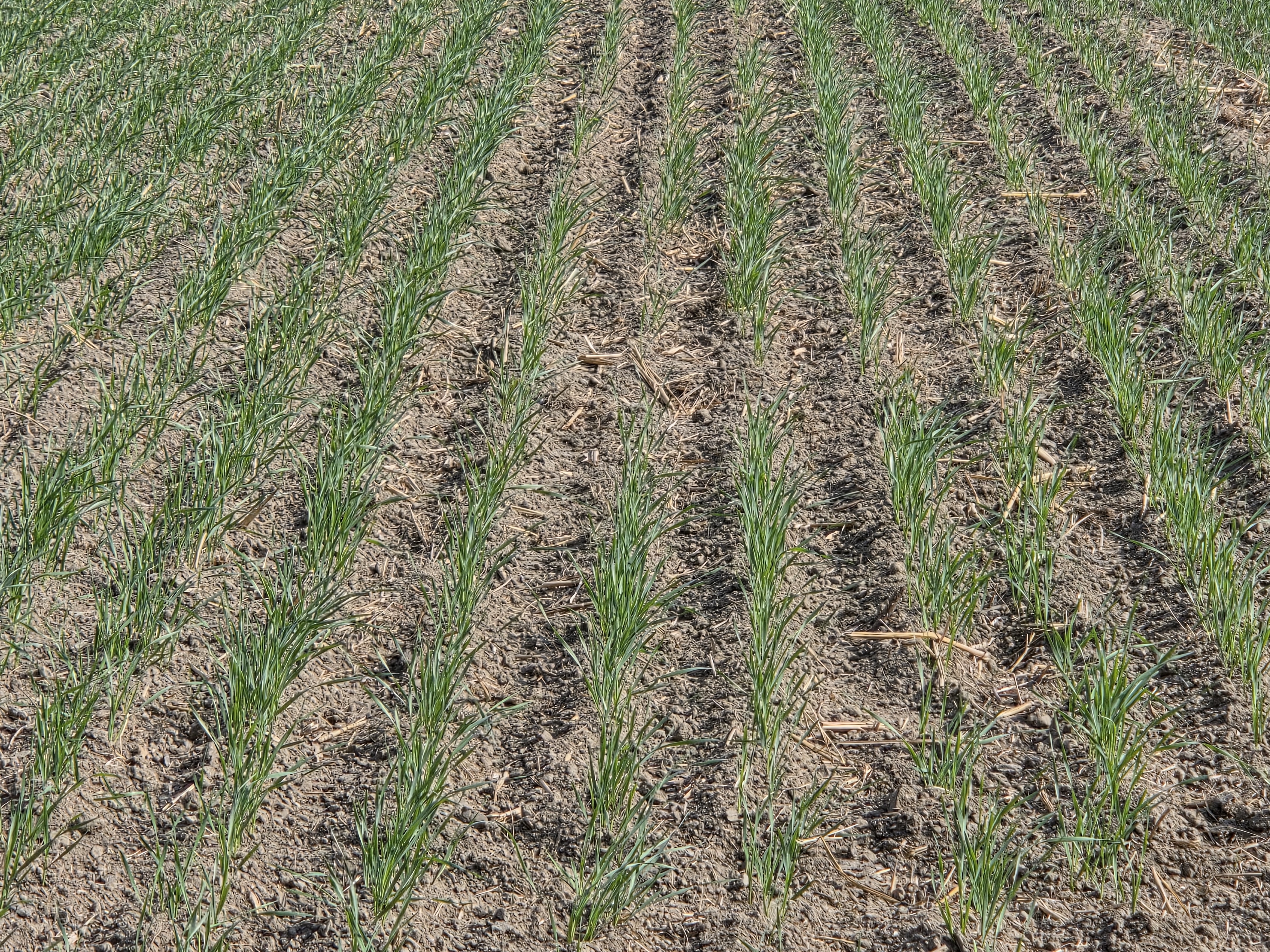
Reading the Rows
The overhead view makes row spacing, emergence pattern, bare soil and residue distribution easy to compare. Such a frame is valuable in a research notebook for locating patches and planning repeat observations. For the contest, it would need a clearer weed subject or a paired comparison before replacing one of the selected five frames.
Declared: 25 November 2025 · file EXIF: 28 November 2025 · location not embeddedBeauty attracts attention. Evidence earns trust.
Field record supplied by the photographer: parthenium net-house series—20 July 2026 at 23.233844, 79.967970; supporting wheat-field photographs—25 November 2025; Avena spp. in wheat (Triticum aestivum)—14 January 2026 at 23.233491, 79.968188. The two supporting wheat files contain 28 November 2025 in EXIF, so the declared date should be verified against the original record before any formal submission.